Charging Pile vs Charging Station: How to Choose the Right Solution for Your Project?
Introduction: Clarifying the Concepts
When planning electric vehicle (EV) charging facilities, “charging pile” and “charging station” are often confused. In reality, they represent distinct concepts at different levels.
| Dimension | Charging Pile | Charging Station |
|---|---|---|
| Essence | A single charging device (analogous to a “fuel nozzle”) | A complete charging site (analogous to a “gas station”) |
| Composition | One charging terminal | Site + Power system + Multiple charging piles + Operation services |
| Function | Solely provides charging capability | Integrated services: power distribution, monitoring, payment, amenities, etc. |
| Investment Scale | Thousands to tens of thousands of RMB | Hundreds of thousands to millions of RMB |
Understanding this is key: choosing a charging device is not the same as building a charging station. The decision involves two levels: first, determine what type of charging equipment (AC or DC? what power level?) is needed; second, decide whether to combine these units into an operational charging station. If you are unsure where to begin, we recommend reading our introductory guide: How to Choose the Right EV Charging Pile for You? .
Level 1 Decision: AC Charging Pile vs. DC Charging Pile
The choice between AC and DC is central to your technical route, as they have significant differences.
1. Quick Comparison
| Comparison | AC Charging Pile | DC Charging Pile |
|---|---|---|
| Charging Speed | Slower (6-8 hours for a full charge) | Fast (20-60 minutes to reach 80%) |
| Power Range | 3.5kW – 22kW | 60kW – 350kW+ |
| Charging Method | Relies on the vehicle’s onboard charger (OBC) | Converts power internally (AC to DC within the pile) |
| Equipment Cost | Lower (approx. a few thousand RMB for 7kW) | Higher (approx. 15,000+ RMB for 60kW) |
| Installation Complexity | Simple, can use standard 220V power | Complex, requires dedicated transformer and high-capacity grid connection |
| Key Use Cases | Homes, offices, overnight parking | Highway services, public fast-charging stations, fleets |
| Impact on Battery | Gentle, helps extend battery life | Frequent use may accelerate battery degradation |
2. Key Technical Differences
- AC Charging Pile: Essentially a “smart socket”. It delivers grid AC power directly to the vehicle, relying on the vehicle’s On-Board Charger (OBC) to convert it to DC. Limited by the OBC’s size and capacity, AC charging is inherently slower, making it ideal for long-duration parking.
- DC Charging Pile: Acts as an “external high-power charger”. It integrates powerful AC/DC conversion modules, feeding DC power directly into the battery and bypassing the OBC. This enables high power output (60kW+) but requires more complex circuitry, cooling, and grid infrastructure.
Level 2 Decision: How to Choose Based on Your Project Needs
The best solution depends on three key factors: parking duration, grid capacity, and budget.
Scenario 1: Residential/Apartment/Office (Overnight/Workplace Charging)
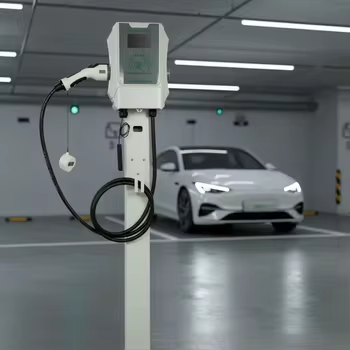
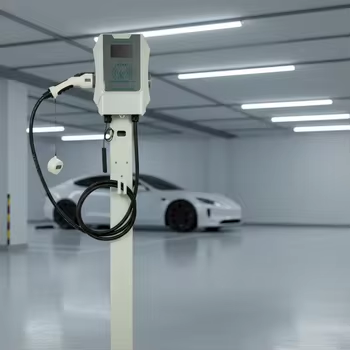
- Recommendation: AC Charging Piles (7kW – 22kW).
- Rationale:
- Vehicles are parked for extended periods (≥6 hours), making slower charging sufficient.
- Lower installation costs and minimal grid impact are ideal for individuals or property management.
- Enables cost savings by charging during off-peak hours.
- Product Example: FFCPOWER offers a range of 7kW-22kW AC charging piles suitable for homes, apartments, and offices.
Scenario 2: Public Fast-Charging Hubs (Highway Service Areas / Urban Operation)
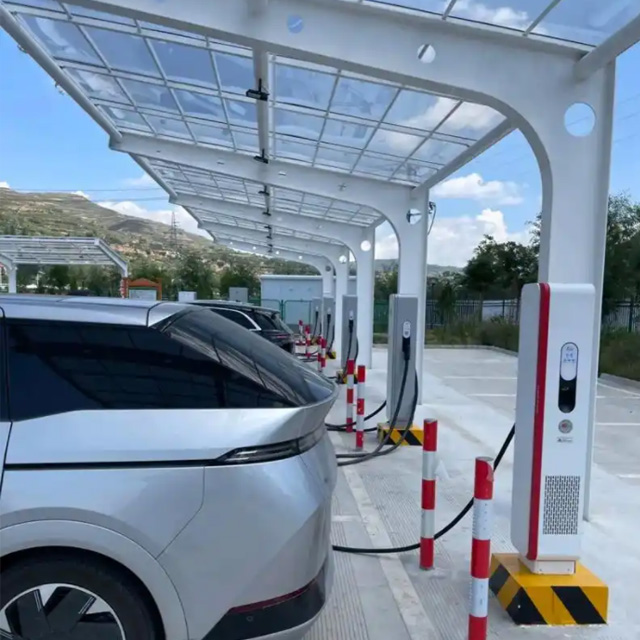
- Recommendation: DC Charging Piles (60kW – 240kW+).
- Rationale:
- High vehicle turnover demands rapid charging to minimize downtime.
- Serves a public function, with revenue potential from a combination of charging fees, service fees, and parking.
- Can be integrated with energy storage and solar for optimized operating costs.
- Product Example: For those needing to deploy high-power stations, we offer a detailed guide: Where to Find 240kW DC Charging Pile for Sale? .
Scenario 3: Shopping Malls/Hotels/Destinations (Leisure/Dining/Overnight Stays)
- Recommendation: Mixed deployment (AC as primary + limited DC fast charging).
- Rationale:
- Most visitors stay for 1-3 hours, so cost-effective AC charging meets most needs.
- 1-2 DC fast chargers can serve as a premium service for urgent needs, enhancing the facility’s appeal.
- Strategy: This approach balances cost and user experience, using AC for basic needs and DC for high-demand situations.
Scenario 4: Commercial Fleets (Logistics / Buses / Ride-hailing)
- Recommendation: DC Fast Charging (dominant) combined with operational scheduling.
- Rationale:
- Fleet operations require vehicles to return to service quickly, necessitating frequent, high-speed charging.
- Match charger power to fleet type (light, medium, heavy-duty).
- Requires careful consideration of layout and scheduling for operational efficiency.
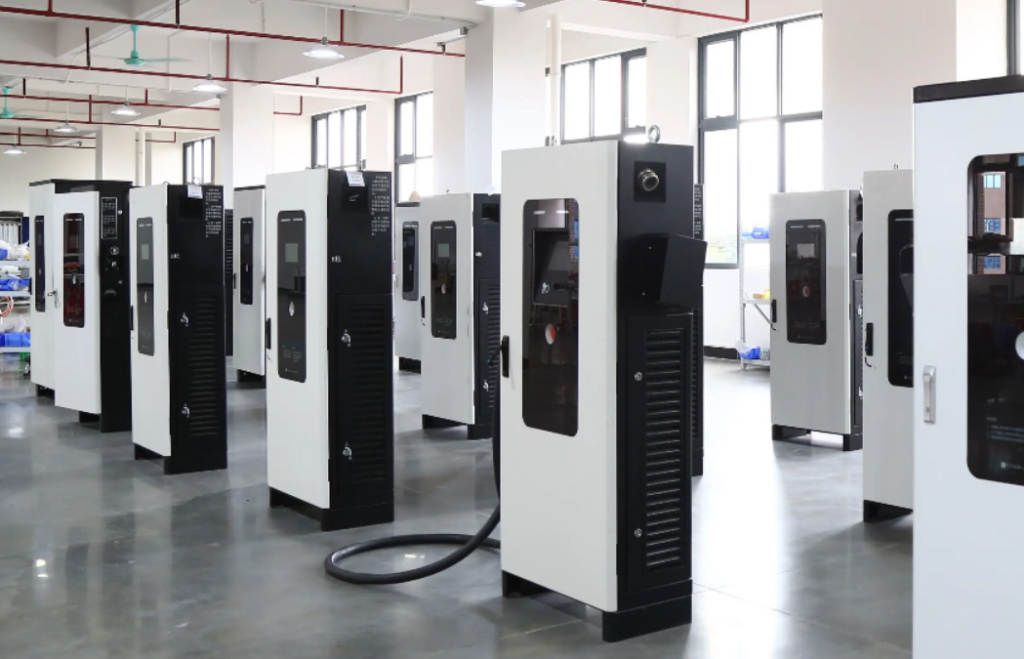
Industry Trend: From “Fixed Power” to “Smart Power Distribution”
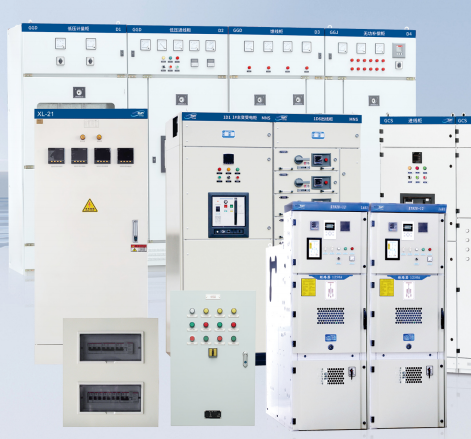
A key trend in large-scale charging facilities is the shift from “integrated charging piles” to “power cabinets + charging terminals” architecture.
| Aspect | Traditional Integrated Pile | Power Cabinet + Terminals |
|---|---|---|
| Power Allocation | Fixed power output, inflexible | Modular design enables dynamic, intelligent power allocation |
| Adaptability | Limited capacity to support future higher-voltage vehicle platforms | Modules can be upgraded for future compatibility |
| Utilization | Efficiency limited by fixed power capacity | Can allocate power to multiple vehicles simultaneously, improving utilization |
| Investment Risk | Risk of premature technological obsolescence | Flexible configuration reduces the risk of technology becoming outdated |
This architecture optimizes power module usage, adjusting output based on each connected vehicle’s demand, better accommodating future EV technology.
Decision Checklist: 5 Steps to Define Your Needs
Before starting a project, evaluate the following questions in order:
- How long will vehicles be parked?
- ≥6 hours → Prioritize AC slow charging
- 1-2 hours → Need DC fast charging
- 15-30 minutes → Must use high-power DC fast charging
- Where will the site be located?
- Residential/Office → Prioritize AC (simpler)
- Highway/Arterial roads → Must have DC fast-charging stations
- Shopping malls/Hotels → Mixed deployment (mainly AC + some DC)
- Is the current power capacity sufficient?
- Assess existing transformer capacity and load margin.
- AC piles can usually connect to existing lines.
- DC charging may require a power upgrade, adding cost and time.
- What is your budget?
- Limited → Prioritize basic infrastructure; deploy AC first, then upgrade.
- Sufficient → Deploy mixed models or consider “power cabinet + terminal” to reserve capacity for future expansion.
- Who are your target users?
- Employees/Residents/Fixed users → Slow AC charging is adequate.
- Public/Transient vehicles/Commercial operations → Must offer fast charging; consider billing, network connectivity, and operating platforms.
Summary: Understanding the relationship between charging piles and charging stations is the first step in planning. The right choice—AC vs. DC, a single pile vs. a full station—is not one-size-fits-all. It depends entirely on your specific use case, power conditions, and budget. Clarify “where, for whom, and for how long,” and then consult the technical specifications to make a precise decision.
If your project parameters are clear, please contact us directly for a tailored charging solution and product quote.